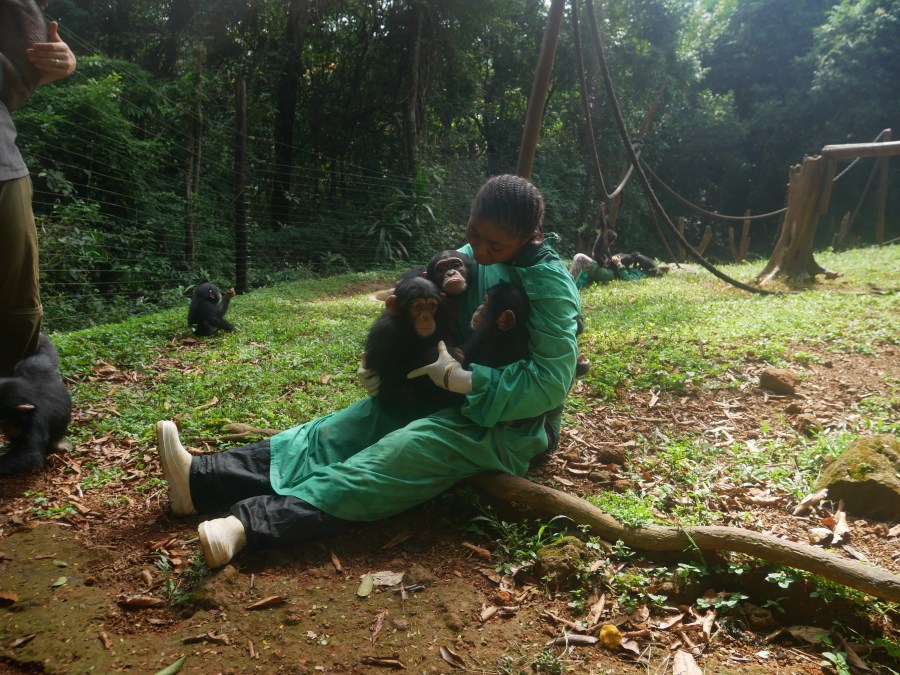
The first week of volunteering at Tacugama was the worst week because I was in quarantine, this meant I could not come in close contact with the chimps. This was a precaution all volunteers had to take to prevent passing contagious illnesses to the animals, however I was full of anticipation and found the feeling of waiting incredibly frustrating; I couldn’t wait to have a more involved role with the animals and I even missed out on the sanctuary tour due to the heavy rains. Once Andy and I had finished quarantine, our first task as volunteers was making enrichment.
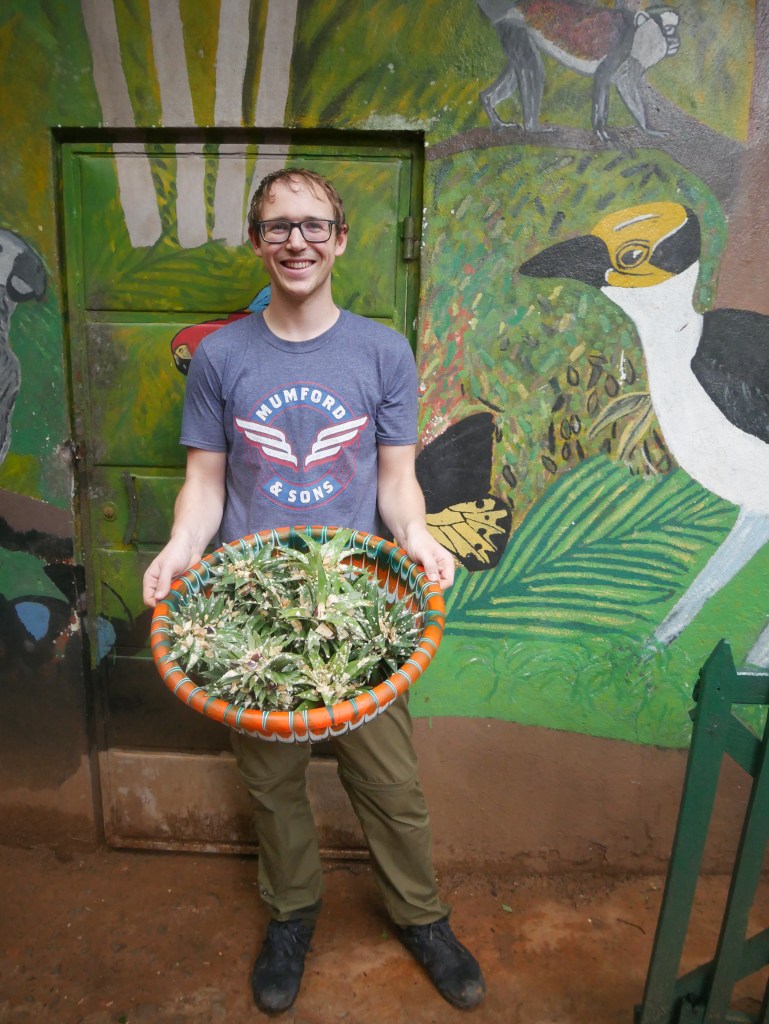
There was a new enrichment that was dirty and empty, when we first saw it it was in dire need of a deep clean. We were armed with bleach and coconut brooms; Andy tackled the spiders and mice while I handled the rest. After a week of making enrichment every day for the chimps it felt like we were getting into a routine. Already we knew all the keepers and were working on learning the names of the chimpanzees who were receiving the enrichment.
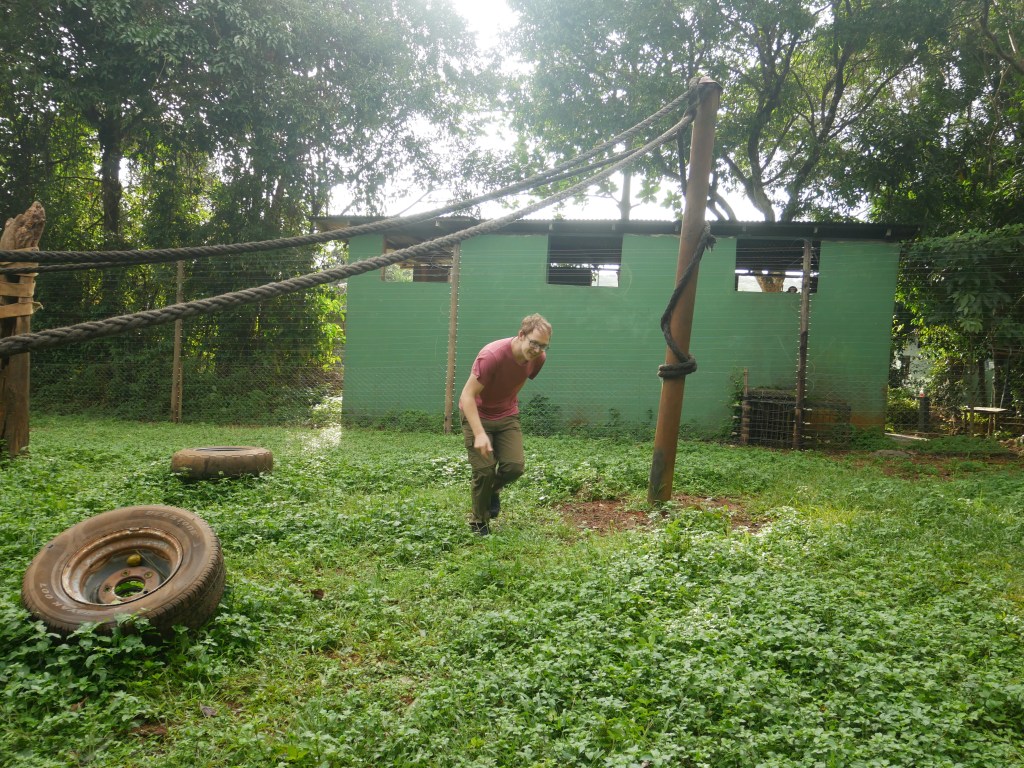
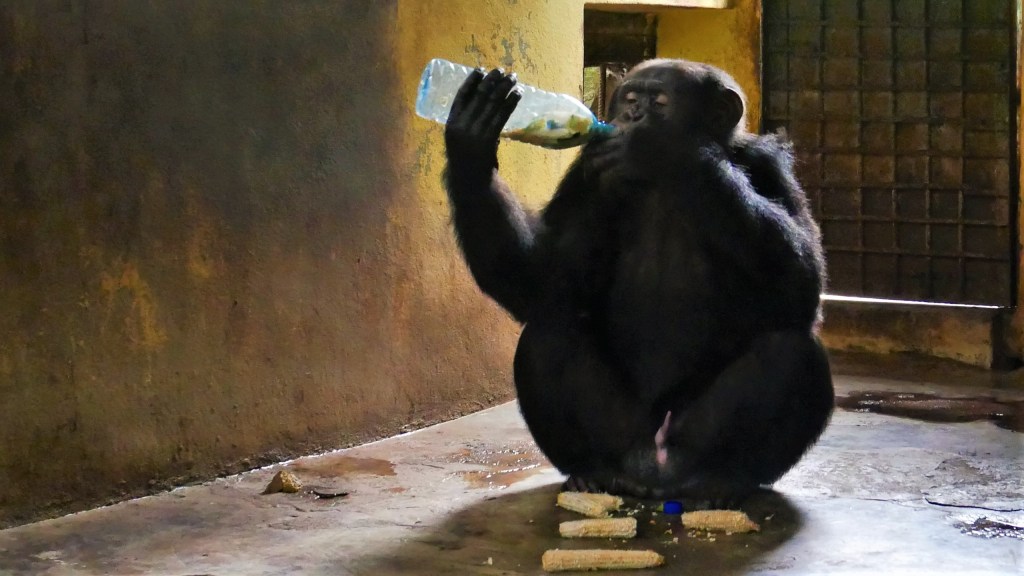
My favourite was a male in Rosalind group called Abu, he had a very friendly personality and was always excited to get his enrichment; you could tell by his happy pant hoot noises. In his group he was the alpha male, however there was a rival alpha (called Jazzy), these two had alternate weeks with one outside in the forest enclosure and one inside the dens. In the wild rival alpha males would fight for the position, potentially dividing the group or leading to injury or death of one of the males. At Tacugama they have a responsibility to care for every animal, so this was the best solution they could provide.
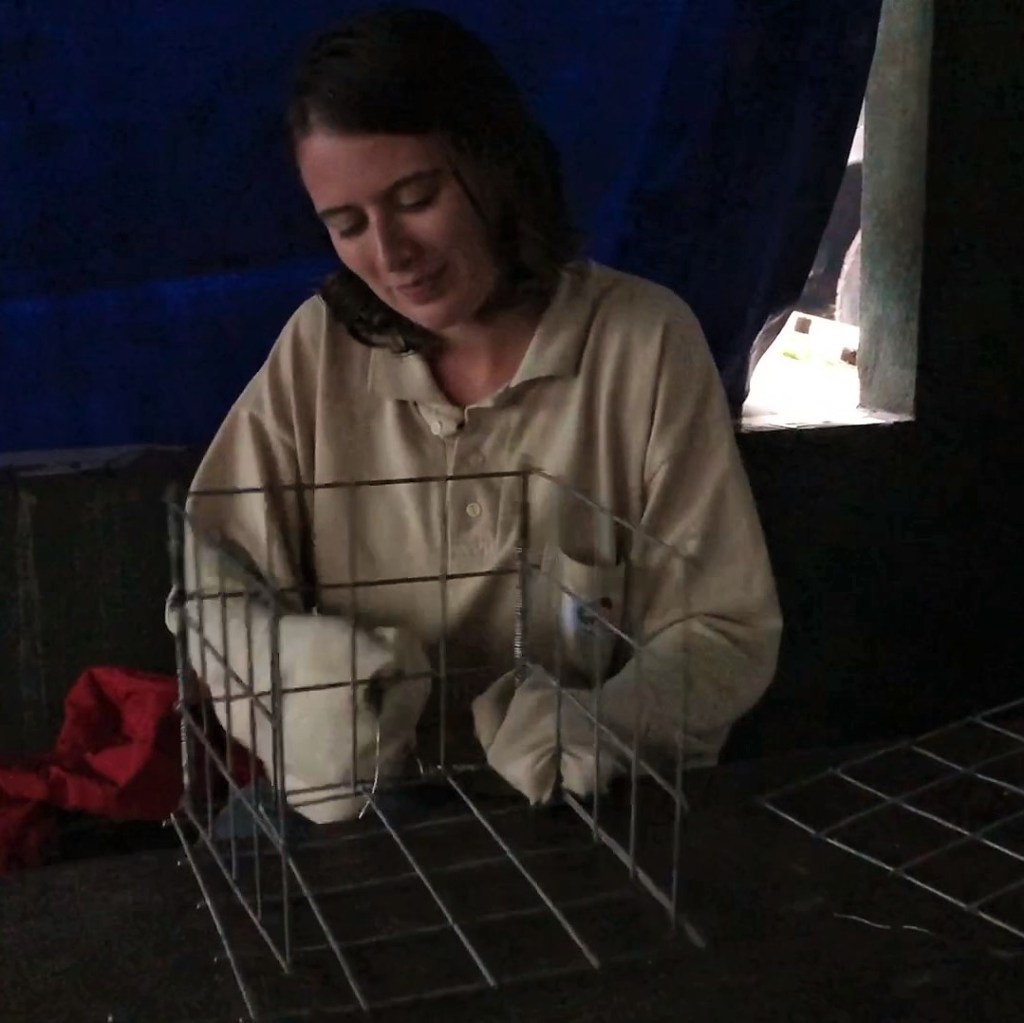
In the afternoons, we both also work on enrichment. For our first project we made foraging cages, the purpose of them was to make it harder for the chimp to retrieve the food inside and also encourage the use of tools. Physically making the cages had its challenges, we started with a large sheet of metal mesh and cut out the six sides to make a cube, at first Andy used a pair of pliers to cut through the rods, luckily Kim invested in a pair of wire cutters which then made this part much, much easier. Then we used metal wire to bind the sides together, this stage was the most time consuming and by the end we had pretty sore fingers. However, it was a relief to be making the cages indoors as by lunchtime were usually already wet from the rain and this meant we were saved from becoming even soggier.
 Kennedy's Crack the Cabin